Philo: Shows, Movies, Live TV.
- 4.4
- Rating
- 5.00M
- Installs
- Free
- Price

 Analysis by App-foxy
I spent time with Philo as an entertainment app, using it less like a single show player and more like a doorway into a broad television subscription. That distinction matters. The app is free to install, but the viewing experience is built around in-app subscription purchases, so it is best understood as a convenient way to explore and manage a paid TV service rather than a free streaming library.
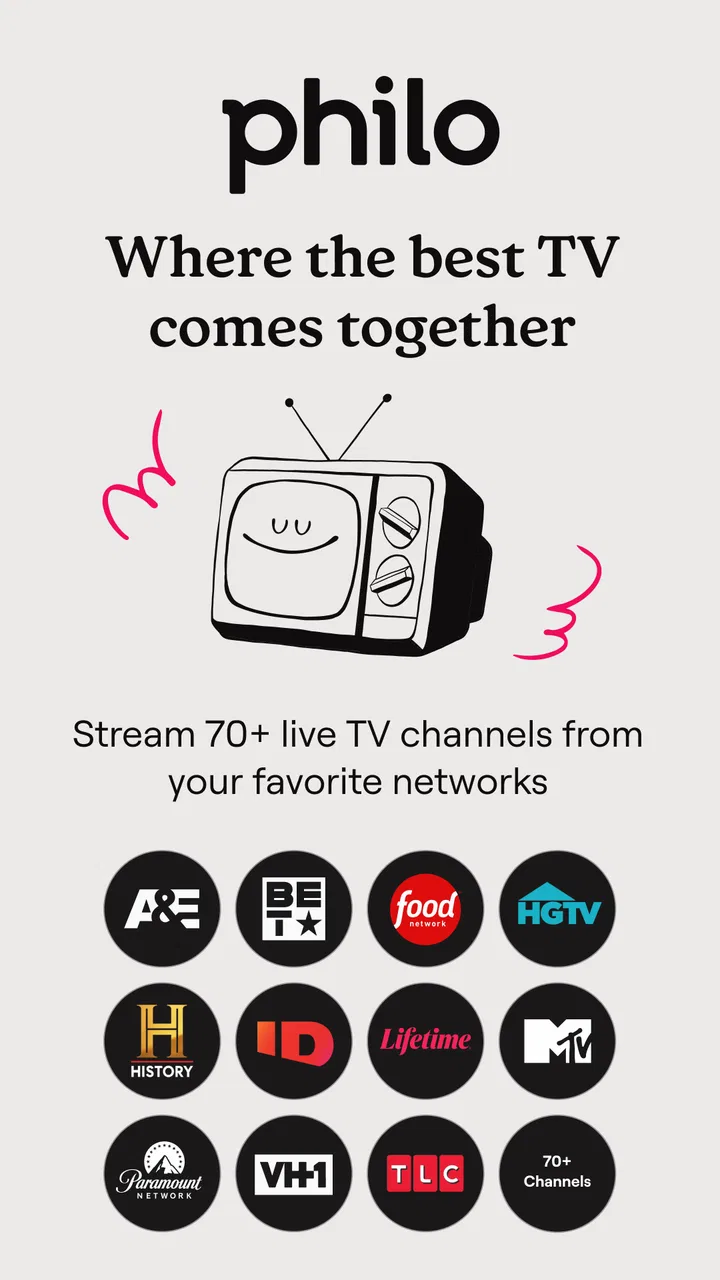
My first impression was that Philo is aimed at people who want live television and on-demand entertainment in one place without constantly jumping between separate apps. Its store summary points to top channels, AMC+, and access to discovery+ and HBO Max through one subscription. In everyday use, that combination makes the app appealing when I want a familiar channel-style experience but also want something available to watch on demand.
The Android version comes from Philo, Inc., and the app sits in the entertainment category. It has a Teen content rating, an average rating of 4.4 from around 33 thousand ratings, and more than 5 million installs. Those figures suggest that it has found a substantial audience, although popularity alone does not guarantee that its channel mix or subscription structure will suit every household.
You May Also Like

 Google Keep - Notes and lists
Google Keep’s Quiet Growth Shows the Appeal of Simpler Notes
As mobile work gets busier, Google Keep keeps winning a simple contest: capture a thought quickly, find it later, and get on with the day.

 Blood Strike: 2.5 Anniversary
Blood Strike’s Loadouts Turn Every Drop Into a Tactical Gamble
A close look at Blood Strike’s custom loadouts: how fast access to signature weapons reshapes its battle royale rhythm, rewards preparation, and narrows the gap between fights.

 Pandora - Music & Podcasts
Pandora’s Music Is Easy to Start, but Harder to Recover
Pandora’s strength is its low-effort path from a seed to a station. Its weak spot is how much confidence it asks you to place in connection, setup, and quiet recovery.

 8 Ball Pool
 Is Built on Rivalries, Rematches, and Routine
A close look at the rivalries, rematches, shared routines, and unanswered safety questions that turn a quick pool match into a persistent mobile community.

 Samsung Music
’s Quiet Strength Is Playing What You Already Own
Its reach comes less from spectacle than from dependable access to a personal library. That simplicity is both the app’s strongest retention engine and its ceiling.

 AccuWeather: Weather Radar
AccuWeather Review: A Quick, Clear Forecast for Everyday Decisions
For everyday plans, the best forecast is the one you can understand quickly. AccuWeather makes rain timing, radar, and local conditions easy to act on, with a few trade-offs.
More From Our News Desk



How Philo feels during ordinary viewing
I find that ordinary viewing is shaped as much by what I choose to open as by what Philo brings together: live television suits an unplanned moment, while a specific title calls for a more deliberate route. That distinction also helps me judge whether a combined service genuinely fits my routine. Next, I’d look at the choices and controls that matter when setting up and using an entertainment account.
Speed expectations when opening and browsing
Philo is most useful when I already know what kind of viewing I want: live television, a familiar channel, a saved program, or an on-demand title. The app’s value is not simply that it plays video; many services do that. Its stronger idea is reducing the need to remember which separate service carries which type of content.
That convenience also creates a busier browsing experience than a narrowly focused streaming app. A service designed around one catalog can feel immediately simple because every screen points toward the same library. Philo has to balance live programming with on-demand choices and additional subscription access, so I found the experience more dependent on how well I used its navigation rather than on endlessly scrolling through recommendations.
For a quick evening session, I would open the app with a decision already in mind. If I wanted casual background television, I would start with live programming. If I wanted a particular series or movie, I would search or move toward the on-demand area instead of browsing every row. This small habit makes the app feel faster because it avoids unnecessary wandering.
The practical speed advantage is decision speed, not just loading speed. Having live and on-demand viewing together can shorten the time between opening the app and actually choosing something, especially for households that otherwise switch among several entertainment services.
What happens during heavier viewing sessions
The most demanding moments are likely to come when the app is handling the full television-service experience: moving between live programming, on-demand content, and connected services during a long session. That is where Philo has more to organize than a basic player. A viewer may begin with a live program, look for another channel, then switch to a series or movie without leaving the same general entertainment environment.
In my experience, the best way to keep a long session comfortable is to avoid treating the home screen as the only route. I would use search when I have a title in mind and use the live area when I want channel surfing. This is a more efficient workflow than repeatedly returning to the opening screen and scanning the same content rows.
There is also a useful trade-off in the all-in-one approach. It can reduce app switching, but it may make the service feel less focused than a dedicated app built around one catalog. Someone who subscribes mainly for one particular on-demand library may prefer opening that service directly, while someone who values a television-like mix may appreciate Philo’s broader arrangement.
For a realistic household example, imagine finishing work and wanting something easy while preparing dinner. Live TV is the natural choice because it removes the pressure to select a specific title. Later, when the house is quiet, searching for an on-demand program makes more sense. Philo fits that change in mood better than an app that only presents a large on-demand catalog.
Reliability and recovering from interruptions
With any streaming app, reliability is not only about whether a video starts. It also includes how understandable the app feels when a session is interrupted, when I change what I am watching, or when I return after using another app. Philo’s role as both a live-TV service and an on-demand destination means that recovery matters particularly during channel changes and transitions between viewing modes.
I would approach it with the same sensible expectations I use for any streaming service: a stable connection and a supported device matter more than the app icon itself. If a household has inconsistent wireless coverage, live viewing will be less forgiving than a downloaded file or a purely offline entertainment option. That is not a special flaw in Philo, but it is an important reason not to judge the service only by its catalog.
When something interrupts a viewing session, the most helpful habit is to return to the exact content path I was using rather than rapidly tapping across several areas. Reopening the live section for live television, or using search for an on-demand title, is clearer than trying to reconstruct the session through the home feed. This is a small recovery technique, but it prevents confusion in a busy interface.
I also would not choose Philo as my only entertainment plan if uninterrupted viewing is essential and my internet connection is unreliable. A traditional broadcast setup or downloaded media can be a better fallback in that situation. Philo is fundamentally designed for connected viewing, so its strengths appear when the network and device are ready for that job.
Device constraints and Android compatibility
The Android app requires Android 7.0 or later, which gives it a wide compatibility range for many still-used phones and tablets. The current version is 9.20.0-934307-google. That is useful information for anyone considering an older Android device, because the operating system requirement should be checked before spending time setting up an account or planning a subscription.
Compatibility is only the first part of the decision. A device may meet the operating-system requirement and still be a poor television screen if it has limited storage, an aging battery, a small display, or weak wireless performance. Long viewing sessions can be less comfortable on a phone than on a larger screen, especially when the purpose is to watch live television rather than briefly check a program.
I would also think about who shares the device. On a personal phone, Philo is convenient for short viewing sessions and checking what is currently available. On a family tablet, it may be more practical for shared viewing, provided the screen and network are comfortable. The app’s usefulness changes considerably depending on whether it is a portable companion or the household’s main television interface.
The free installation helps with testing device compatibility before committing financially. Still, “free” should not be confused with free access to the full service. The app includes in-app purchases ranging from about twenty-nine to thirty-eight dollars per item, so I would review the subscription choice carefully and make sure it matches the way I actually watch television.
Where the service fits beside usual alternatives
Philo occupies a middle ground between traditional live-TV packages and standalone streaming apps. Compared with a single on-demand service, it offers a more channel-oriented experience and can be better for viewers who like turning on television without selecting a specific series first. Compared with a traditional television package, its appeal is the convenience of using an app and combining live viewing with on-demand access.
That middle position is also its main limitation. If I only care about one exclusive catalog, a direct subscription to that service may be simpler. If I need a very broad traditional channel lineup, I would compare Philo’s offering carefully against a full live-TV alternative before paying. The right choice depends less on the app’s general quality than on whether its particular mix of channels and connected content matches my habits.
The mention of AMC+, discovery+, and HBO Max access is especially relevant to people trying to consolidate services. One subscription can be attractive when it genuinely replaces several separate viewing routines. However, I would not assume that consolidation automatically means savings or simplicity for everyone. A viewer who rarely uses live television may pay for an arrangement that offers more breadth than they need.
My advice is to write down the three kinds of viewing that happen most often in your home: live channels, on-demand series, and movies. If live programming is central and the additional entertainment access is useful, Philo becomes easier to justify. If nearly all viewing starts with a specific on-demand title, a more specialized service may be the cleaner option.
Small workflow choices that improve the experience
My first tip is to separate “I want something on now” from “I want this exact title.” Use the live-TV path for the first situation and search for the second. Mixing those intentions is what makes many television apps feel slower than they really are.
My second tip is to treat Philo as a household viewing hub only if the subscription content will actually be used. The presence of several types of entertainment can look impressive, but unused access is still unnecessary cost. Before subscribing, consider whether the people using the account will watch live channels often enough to make the combined setup worthwhile.
My third tip is to test the app on the device that will do most of the watching, not only on the newest phone available. A service can feel perfectly comfortable during a short mobile test and less satisfying during a long session on an older tablet or a device with limited battery life. The Android requirement tells me whether installation is possible; the actual screen, connection, and comfort determine whether viewing is enjoyable.
My fourth tip is to use the app’s different viewing modes intentionally. Live television is useful for relaxed discovery, while on-demand access is better when I have limited time and want control over the choice. Treating both modes as interchangeable can make the service seem cluttered, but giving each one a job makes the overall experience more coherent.
Who should use Philo and who should skip it
I would recommend Philo to someone who misses the simplicity of turning on a channel but still wants app-based access to series and movies. It is also worth considering for households that want to reduce the number of entertainment apps they open during a normal week and can make meaningful use of the included access to additional services.
It is less convincing for a viewer who watches only occasional free content, refuses recurring entertainment purchases, or wants a completely offline experience. The app is free to download, but the important decision is the paid viewing arrangement behind it. Anyone focused on one narrow catalog should compare the direct alternative before choosing a broader television package.
Families should also think about viewing priorities rather than assuming that one service solves every need. A live-TV fan may find Philo useful, while another household member may care more about a different catalog or a different type of programming. The service works best when its mix is shared by the people paying for it, not when one person is trying to justify it for everyone else.
My performance verdict after using the app
Philo feels most successful when I use it as a flexible television hub rather than as a replacement for every streaming service. Its combination of live channels, movies, series, and access to AMC+, discovery+, and HBO Max gives it a clear purpose for viewers who want variety without constantly changing apps.
Its performance expectations should remain realistic. The Android requirement is approachable, but actual comfort depends on the device, display, and connection. Heavy sessions that move between live and on-demand viewing ask more from the app than a quick check of a title, and viewers with unstable internet should keep their expectations modest.
The subscription cost also deserves attention. With in-app purchase options of roughly twenty-nine to thirty-eight dollars per item, this is not a casual free entertainment download once regular viewing begins. I would install it first, check how naturally its live and on-demand areas fit my routine, and then decide whether the combined offering replaces enough separate services to earn its place.
Overall, I see Philo as a sensible choice for people who want the rhythm of live television with the flexibility of app-based on-demand viewing. I would recommend it to a friend who regularly watches channels and wants broader access in the same environment. I would steer a single-catalog viewer elsewhere, but for the right household, Philo is strongest as a practical bridge between traditional TV habits and modern streaming.
FAQs for Philo: Shows, Movies, Live TV.
01What is Philo and what content does it offer?
Philo is a streaming service that provides access to a wide range of TV shows, movies, and live television channels. With a focus on entertainment, lifestyle, and knowledge channels, it offers popular networks such as AMC, A&E, and Discovery. Philo is known for its affordable pricing compared to other streaming platforms.
02Does Philo offer a free trial period?
Yes, Philo offers a 7-day free trial for new users. This trial allows you to explore the platform's features, channels, and content selection without any commitment. During the trial, you can experience the service fully, and decide if it suits your entertainment needs before subscribing.
03On which devices can I watch Philo?
Philo is compatible with a variety of devices, including smartphones and tablets (iOS and Android), web browsers, Roku, Amazon Fire TV, Apple TV, and Android TV. This wide range of compatibility ensures that you can enjoy your favorite content on almost any device you own at home or on the go.
04How many simultaneous streams does Philo allow?
Philo allows you to stream content on up to three devices simultaneously. This feature makes it convenient for families or roommates who might want to watch different shows or movies at the same time. You can also create up to 10 user profiles, each with personalized recommendations and saved shows.
05Are there any ads on Philo, and can I skip them?
Yes, Philo includes ads as part of its streaming service, similar to traditional cable TV. However, Philo provides a DVR feature that allows you to record shows and skip ads during playback. This feature gives you more control over your viewing experience, though some on-demand content may still include unskippable ads.
Pros
- Affordable subscription plans.
- User-friendly interface design.
- Wide variety of channels available.
- Good streaming quality.
- No hidden fees or contracts.
Cons
- Limited sports channels.
- No offline viewing option.
- Ads in on-demand content.
- Lacks local network channels.
- No parental control features.

Philo: Shows, Movies, Live TV.
Gallery